My 2025 Review: Estonian Startup Ecosystem & Portfolio
Is the Estonian startup miracle over? If you only read the headlines, you might think so. But after spending a year away in Mauritius and returning to the "scene of the crime," I see a different story.
The Mauritius Perspective: Fresh Eyes on an Old Challenge

There is nothing like leaving a country to understand it better. I spent the last year living in Mauritius with my family, stepping out of the daily grind of the Estonian tech bubble.
When I walked into the Estonian Startup Ecosystem Annual Fireside Chat this year—not just as an angel investor and EstBAN member, but as a visitor—the vibe shift was undeniable.
The content presented on stage was mildly positive. The founders are building, the funds are deploying (selectively), and the "Estonian mafia" is as strong as ever. Yet, the headlines from local media about the ecosystem—and the year in general—have been surprisingly negative.
This is a classic Estonian paradox: We are pessimistic in our marketing but optimistic in our building. We complain about the weather while building world-class mobility and fintech platforms. We complain about the economy while building unicorns.
Is the Estonian Startup Ecosystem Actually Dying?
Short answer: No. Long answer: It’s maturing. And maturity can be boring.
In 2021, "success" was measured by how much money you raised. In 2025, success is measured by survival, revenue, and resilience. The "tourists"—the founders and investors who were here for the easy money—have packed up and left.
What remains is the "stubborn Estonian farmer" mentality. The data from the Estonian Founders Society confirmed that while deal volume is down, the quality of the companies left standing is higher. We aren't seeing the death of the ecosystem; we are seeing the end of the noise.
The Data Behind the Vibe: Efficiency Over Hype
While the public headlines were busy predicting the end of the world, the actual numbers from the Fireside Chat told a story of maturity. We aren't growing by burning cash anymore; we are growing by actually building businesses which have revenues (and profits).
As Allan Martinson (President of the Estonian Founders Society) noted, the "stubborn farmer" mentality has officially replaced the "growth at all costs" mindset, and the results are undeniable:
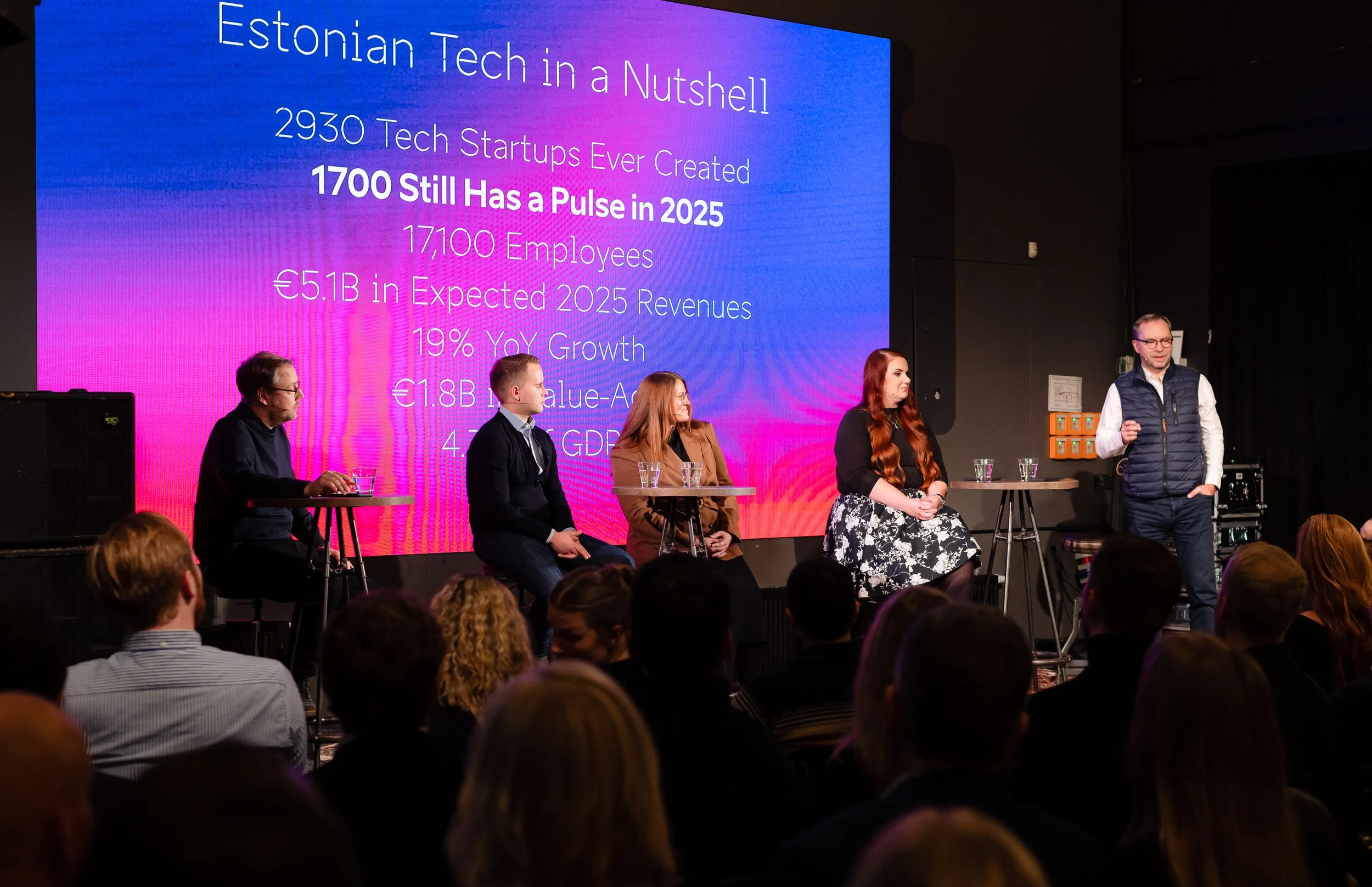
Doing More With Less: The number of employees in the sector has stayed flat for four years, yet we are generating 2.5x more added value per employee. The bloat is gone; the muscle remains.
The New Economic Anchor: The startup sector now accounts for 4.3% of Estonia’s GDP (€1.8 billion in added value), proving we are no longer a niche "project" but a pillar of the national economy.
Profit is the New Series A: Turnover is forecast to exceed €5.1 billion (up nearly 20% while the overall Estonian economy grew by only about 1%). The real shift is that profits are replacing investor funding as the primary growth engine.
The Demographic Warning: It’s not all sunshine. We are seeing fewer new companies founded, partly because there are simply fewer 30-year-olds in Estonia today than five years ago. This is the next challenge we must solve—not with hype, but with talent migration.
Entrepreneurship Has Not Disappeared: While local challenges exist, Vaido Mikheim, Head of Startup Estonia, reminded the audience of the broader global picture: "Every day, 137,000 new startups are founded worldwide". We are in a global race for talent and capital.
My 2025 Report Card: The Good, The Bad, and The Scam
Wealth comes from entrepreneurship, but keeping it comes from smart (and sometimes painful) investing.
Here is my personal startup portfolio breakdown for 2025:
The Wins (Liquidity & Growth)
2 Successful Exits: I served as the lead investor for the syndicate in both cases. Lesson: Passive investing is great, but active leadership in the deal protects and amplifies your capital.
3 New Rounds: Three of my portfolio companies raised capital in a "frozen" market. This validates that good companies always get funded.
The Strategy (Patience)
1 New Investment: Yes, only one. In a year where headlines screamed "buy the dip," I sat on my hands. I’m looking for generational companies, not quick flips.
The Reality Checks (The "Honorable Deaths")
1 "Underwater" Exit: We got a few pennies back, but for sure not what we hoped for. A reminder that liquidity is a privilege, not a guarantee.
2 Honorable Deaths: These were bankruptcies, plain and simple.
The Ugly
1 Scam Discovered: Even with years of experience, you can get blindsided. Due diligence isn't a checklist you do once; it's a constant state of paranoia. Character remains the only asset you can’t hedge.
FAQ: Investing in a Down Cycle
Q: Is now a bad time to be an angel investor in Estonia? A: It is a terrible time to be a gambler. It is an good time to be an investor. Valuations are more realistic, founders are more serious & disciplined, and the competition for deals is lower.
Q: How do you spot an "honorable death" vs. a bad founder? A: Communication. A founder who hides bad news until the bank account is zero is a liability. A founder who calls you six months in advance to say, "We are in trouble, here is the plan," is a partner you can trust.
Conclusion
2025 was a year of "mildly positive" reality masked by negative headlines. For the long-term player, this gap between perception and reality is where the opportunity lies. My own portfolio saw a record number of exits this year—I certainly can't complain!
I am welcoming the "boring" years. They clear the field for those of us building for the next decade, not just the next quarter.
Next Step: Look at your own portfolio for 2025. Did you have any "honorable deaths"? If not, ask yourself: Are you actually taking enough risk?
Read more and see the recording of the event: Startup Estonia: Annual Fireside Chat 2025